





7 Smart Places to Install Hooks in Your Home (That Most Indians Miss)
|
The seven smartest places to install hooks in an Indian home are behind the main door, inside the bathroom door, beside the washbasin, near the kitchen stove, on the bedroom door or wardrobe side, in the balcony or utility area, and in the kids’ room or study. Each one turns unused vertical wall space into everyday storage — and matching the hook’s material and fixing to that particular zone is what decides whether it lasts a decade or rusts out by the next monsoon. |
Walk into most Indian homes and you’ll find hooks in exactly one spot — behind the bathroom door. Maybe two, if there’s an old nail near the entrance holding a bunch of keys. That single habit leaves a lot of wall space, and a fair amount of daily irritation, completely unused.
Good wall hooks for a home in India do far more than hold a wet towel. Put in the right place, they clear countertops, get bags off the floor, and give every person in the house a fixed home for the things they grab on the way in and out. Put in the wrong place — bad height, wrong metal, weak fixing — they corrode, work loose, or simply never get used.
Over the years, helping homeowners and builders fit out door and bath hardware, I’ve come to rely on seven spots that pull their weight. For each one below, you’ll get the job it solves, the kind of hook that survives Indian conditions, and the one placement detail people most often get wrong.
Why hook placement matters more in Indian homes
Three local realities decide whether a hook lasts.
• Wall type. Most Indian homes are solid RCC and brick, so the fixing matters as much as the hook. A plate-style hanger with two or more anchor points holds a loaded bag far better than a single screw ever will.
• Humidity and salt air. Monsoon damp, bathroom steam, and coastal air corrode weak metals quickly. This is what rules out bare zinc alloy anywhere that gets wet.
• Hard water. Across much of North India and parts of the South, tap water is hard. Under the Bureau of Indian Standards drinking-water spec (IS 10500:2012), the acceptable limit for total hardness is 200 mg/L, extending to 600 mg/L where no better source exists. Harder water leaves spots on shiny finishes and speeds up rust on cheap plating near basins and taps.
Get the material right for the zone and the rest falls into place:
|
Zone |
Best hook material |
Avoid |
|
Dry (entry, bedroom, study) |
Aluminium, stainless, PVD brass |
— |
|
Wet (bathroom, balcony, utility) |
Stainless steel (SS304), aluminium |
Zinc alloy, cheap plated |
|
Kitchen (oil + heat) |
Stainless steel, aluminium |
Chrome/plastic near flame |
Read that as a quick guide, not a rulebook — but zinc alloy in a wet zone is the one line worth never crossing.
The 7 smartest places to install wall hooks in an Indian home
1. Behind the main door
This is your drop point — where bags, keys, jackets, and umbrellas get dumped the second you step in. A defined hanging zone here stops keys and totes migrating to the sofa, the dining table, and the kitchen slab. Use a plate-style door-back hanger, not a single-screw hook.
India tip: behind a heavy wooden door on an RCC wall, a plate with two or more anchor points spreads the load and won’t work loose every time the door slams.
2. Inside the bathroom door
The classic spot, done properly. A row of hooks holds towels, robes, and nightwear, freeing up the towel rod and keeping a change of clothes off the cistern lid.
India tip: a bathroom is permanently humid, so stick to aluminium or a stainless-steel finish. Zinc-alloy hooks look fine on day one and start pitting within a few months in an Indian bathroom.
3. Beside the washbasin (the hand-towel zone)
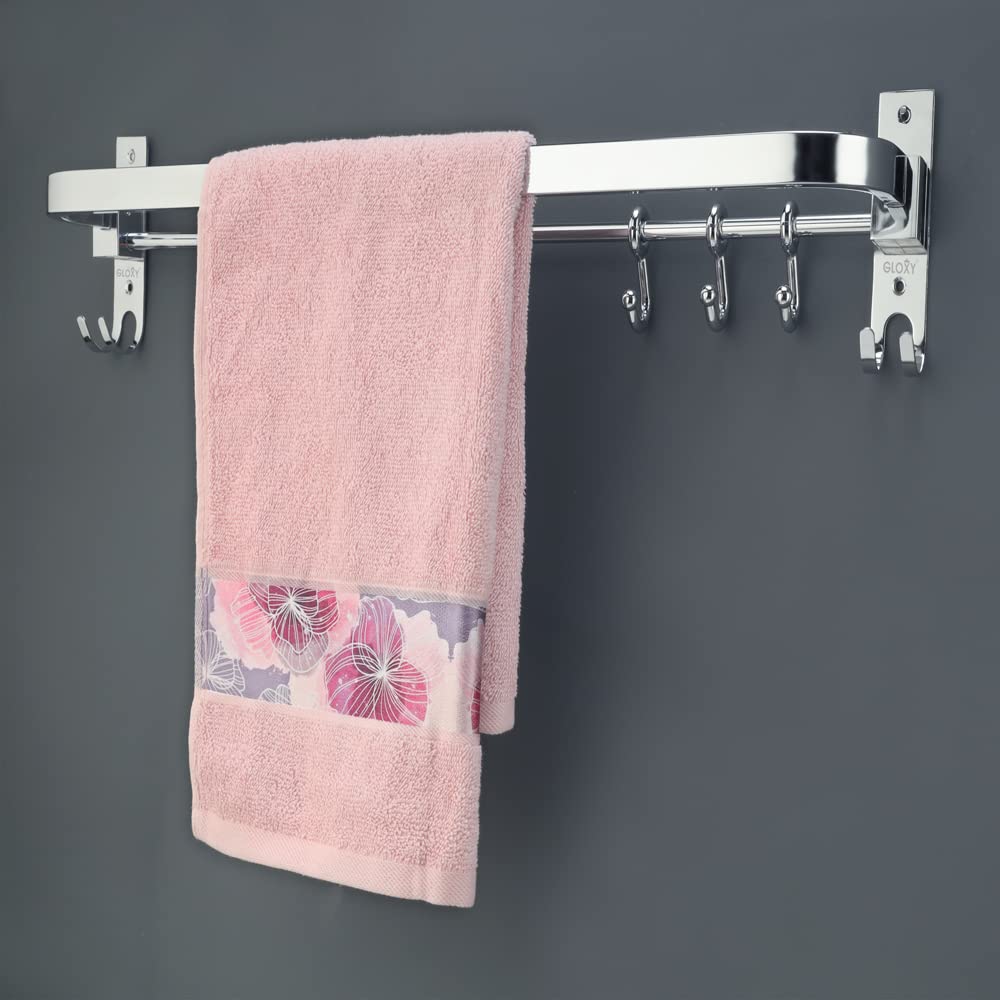
A dedicated hand-towel and face-towel spot means the bath towel stays dry and nobody drapes a wet face towel over the tap. It’s a small fix that keeps the whole basin area looking tidy. A short towel rod with an integrated hook works well here.
India tip: mount it around 36–40 inches from the floor and at least 6 inches clear of the tap’s splash zone, so the towel isn’t sitting permanently damp.
4. Inside the kitchen, near the stove
Ladles, spatulas, oven mitts, and small utensils belong within arm’s reach of the cooktop — not buried in a drawer under the skillets. Hooks keep the tools you reach for mid-cooking off the counter and easy to grab.
India tip: this is an oil-and-steam zone. Choose stainless steel or aluminium, and keep the hook a safe distance from an open flame — avoid chrome-plated pieces right beside a gas burner.
5. On the bedroom door or wardrobe side
A staging hook keeps tomorrow’s outfit, a handbag, belts, and scarves off the bed and off the “clothes chair” every home secretly owns. It makes mornings quicker and the room instantly neater.
India tip: a rose-gold or brushed finish reads as an accent rather than utility hardware, so it sits comfortably with bedroom décor while still doing a real job.
6. In the balcony or utility area
Mops, brooms, dustpans, and cloth bags get off the floor and dry properly when they hang. A folding rack here does double duty — a rail for drying plus hooks for cleaning gear.
India tip: an open balcony takes full monsoon humidity, so use SS304 or aluminium only. Anything plated or zinc-based will streak and rust inside a single season.
7. In the kids’ room or study area
School bags, sports gear, headphones, and caps end up on the floor unless there’s an easy home for them. Hooks at kid height turn “drop it anywhere” into a habit children can actually manage themselves.
India tip: install at 48–52 inches for school-age children so they can hang a loaded bag on their own; go lower for younger kids.
Comparing the common hook materials

Since material is the decision that outlasts every other, here’s how the usual options behave in Indian conditions:
|
Material |
Corrosion resistance |
Upkeep |
Good for |
|
Aluminium |
Won’t rust; softer metal |
Low |
Most dry and wet zones |
|
Stainless (SS304) |
Strong; handles wet zones |
Low |
Bathroom, balcony, kitchen |
|
Zinc alloy (plated) |
Weak once the plating chips |
Medium |
Dry, decorative use only |
|
Brass (PVD-coated) |
Good; resists tarnish well |
Low |
Bedroom, entryway accents |
|
🔧 Expert Note The single most common mistake I see is a single-screw hook driven into an RCC wall. Indian walls need plate-style hooks with at least two anchor points — they spread the load, hold their alignment, and won’t pull out when a heavy school bag or a soaked bath towel goes on them. If the pack comes with only one tiny screw for a load-bearing spot, treat that as a warning, not a saving. |
To drill or not to drill?
For light loads, no-drill adhesive hooks are tempting. They have a place, but know the trade-off before you commit a wet towel to one.
|
✔ Pors |
✕ Cons |
|
No holes, no tools, easy to reposition |
Grip weakens in humidity and heat — exactly the conditions in Indian bathrooms and kitchens |
|
Fine for a face towel, robe, or light accessories on clean, dry tile |
Not for bags, wet towels, or anything you’d be upset to see hit the floor |
For anything with real weight, drill into the wall or grout line with a proper anchor.
Quick reference: how high to place each hook

Height is what decides whether a hook gets used or ignored. Treat these as starting points and adjust for whoever uses the spot most:
|
Zone |
Suggested height (from floor) |
Fixing note |
|
Main door / entryway |
60–66 in (adult reach) |
Plate hanger, 2+ anchors into RCC/brick |
|
Bathroom door |
60–66 in |
Aluminium or SS in humidity |
|
Washbasin hand-towel |
36–40 in |
6+ in clear of the tap splash zone |
|
Kitchen (near stove) |
50–56 in |
SS/aluminium; keep clear of the flame |
|
Bedroom / wardrobe |
58–64 in |
Over-door or side-mounted plate |
|
Balcony / utility |
55–62 in |
SS304 or aluminium only; wall-anchored |
|
Kids’ room / study |
48–52 in (school-age) |
Lower for younger children |
Three buying mistakes to avoid
• Buying zinc-alloy hooks for wet zones. They pass the showroom test and corrode within about six months in a humid bathroom or open balcony. Choose stainless steel or aluminium for anything that gets wet.
• Installing too high. Hooks above 60 inches look tidy on the wall but are awkward to reach, so people quietly stop using them. Set everyday hooks at a comfortable height for the person who’ll use them.
• Using only one hook per zone. A lone hook fills up fast and sits lopsided on the wall. Install in pairs for balance and enough capacity.
How to choose, in order
When homeowners ask me to make it simple, I give them this sequence — answer each step and the shortlist almost builds itself.
• Start with the zone. Wet or humid means stainless steel or aluminium; dry means you can add brass or a decorative finish.
• Match the load. Bags and wet towels need plate-style, multi-anchor hooks; keys and scarves can go on lighter one.
• Set the height for whoever uses that spot most, using the reference above.
• Then pick the finish. Only once the first three are settled does colour and style come into it.
|
💡 Buyer Tip On wet-zone hooks, buy one tier up. A corrosion-resistant stainless or aluminium hook costs a little more today, but it outlasts three cheap plated ones that streak and rust out by the next monsoon — so it’s the cheaper choice over the life of the wall. |
If you’d rather compare finishes side by side before deciding, browsing a focused hardware range — Gloxy’s door-back hangers and towel hooks, for example — lets you filter by material and finish, so you’re matching the hook to the zone instead of guessing in a crowded aisle.
Conclusion
Good storage isn’t about buying more furniture — it’s about using the vertical space you already have. The right wall hooks for a home in India turn seven overlooked spots into daily-use storage that clears the clutter without costing an inch of floor. Start with the main door and the bathroom, get the material and height right for each zone, and add the rest as you settle into the habit. Do that and the hooks you put up this weekend will still be earning their place years from now.
FAQ
What type of hook is best for Indian bathroom doors?
Stainless steel or aluminium hooks are best, because they hold up to the constant humidity and steam. Avoid zinc-alloy or cheap chrome-plated hooks, which tend to corrode and pit within a few months in a wet zone.
Can I install hooks on tiles without drilling?
Yes, for light loads. A strong adhesive hook rated for the weight can hold a face towel or robe on clean, dry tile without drilling. For anything heavier, like bags or wet towels, drill into the wall or grout line with a proper anchor, since adhesive grip weakens in humid conditions.
What height should hooks be installed at in India?
For adults, mount everyday hooks around 60–66 inches from the floor; for school-age children, 48–52 inches works well. Bathroom hand-towel hooks sit best at about 36–40 inches, clear of the tap’s splash zone.


