



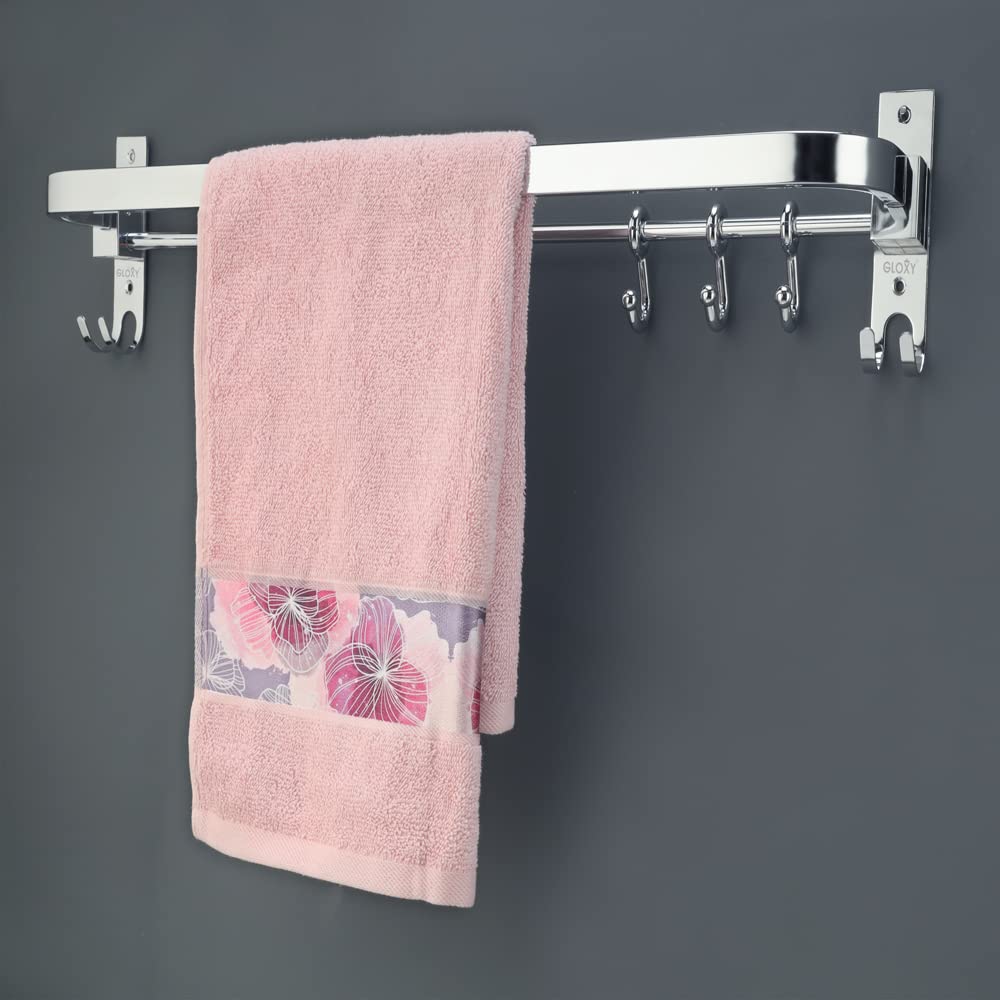

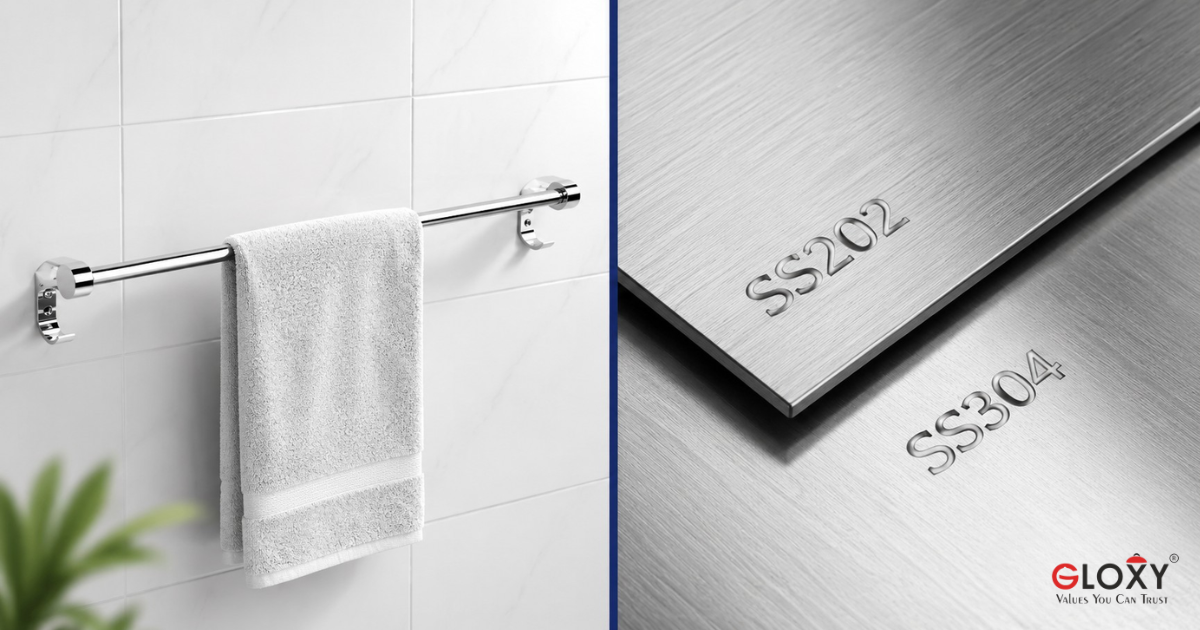
Last month, a customer from Patna messaged us with a photo of two towel rods from a local hardware shop. They looked identical — same shine, same design. One was ₹450, the other ₹1,100. When he asked the shopkeeper about the difference, the answer was: "Dono steel hai, bhai."
Both were steel. But one was SS202 and the other SS304 — and that difference decides whether your fitting looks new after five years or shows rust spots after two monsoons. Here's the honest comparison.
The 30-Second Answer
The main difference between 202 and 304 stainless steel is nickel content — SS304 has ~8%, SS202 has 4–6%, which means better corrosion resistance at a higher price. Choose SS304 if you live in a coastal city, have a constantly wet bathroom, or want maximum lifespan without much maintenance. Choose SS202 if you live inland, keep your bathroom ventilated, and want good looks at a sensible price. Neither is fake — they're built for different conditions and budgets.
What's Actually Different Inside the Steel
Both grades belong to the same austenitic stainless steel family. The difference is nickel — the expensive element that fights corrosion.
- SS304 contains roughly 18% chromium and 8% nickel (that's why it's called "18/8" steel)
- 202 grade stainless steel reduces nickel to around 4–6% and substitutes manganese and nitrogen to cut cost
Because nickel prices fluctuate globally, the Indian market shifted heavily toward SS202 over the last two decades to keep products affordable. That's why it's the most common grade in Indian fittings today — the same trade-off applies whether you're buying a towel rod or working through a kitchen sink buying guide.
SS202 vs SS304 vs SS316 — Quick Comparison

| Feature | SS202 | SS304 | SS316 |
| Nickel content | 4–6% | ~8% | 10–14% |
| Corrosion resistance | Moderate | Good | Excellent |
| Hard water performance | Moderate | Good | High |
| Coastal suitability | Low | Moderate | High |
| Price | ₹ | ₹₹ | ₹₹₹ |
| Typical lifespan with care | 5–8 yrs | 7–10 yrs | 10+ yrs |
Which Grade for Which Indian Home?
This is where most articles stay vague. Don't buy by grade alone — buy by environment.
Where SS202 Works Well
- Inland cities like Delhi, Jaipur, Bhopal, Nagpur, Lucknow
- Ventilated bathrooms with an exhaust fan
- Guest bathrooms and low-use areas
- Budget renovations where looks matter — pair it with choosing the right towel rod size for the space
Where SS304 (or Higher) Is Worth It
- Coastal cities — Mumbai, Chennai, Kochi, Goa — where salt air attacks lower grades fast
- Shower zones that stay wet all day
- Hard water areas where mineral deposits cause pitting
- Homes where nobody has time for maintenance
Expert Note: Grade isn't the whole story. A well-made SS202 fitting with a proper chrome or PVD coating and good sheet thickness often outlasts a thin, poorly finished 304 product. Finish and gauge matter as much as the number stamped on the box — the same rule applies to stainless steel bathroom shelves and racks.
How to Verify You're Getting What You Paid For
Mislabeled steel is common in the market, especially online. Three checks:
- Ignore the magnet test. Both 202 and 304 are largely non-magnetic — a magnet proves nothing.
- Ask for markings or an MTR. Genuine manufacturers stamp ASTM grade numbers on products, and bulk suppliers can share a Material Test Report on request — essential if you're sourcing bathroom accessories in bulk.
- Watch the price. If a 304 product costs the same as typical 202 items, be suspicious. Nickel is expensive — real 304 always costs noticeably more.
Buyer Tip: Whatever brand you buy, check whether the grade is stated clearly on the product page. Transparency about the grade is usually the best sign of an honest seller — and skipping this check is one of the most common bathroom accessories mistakes.
SS202 vs SS304 Price: Cost-Per-Year Math
Instead of comparing sticker prices, divide price by realistic lifespan. A ₹500 SS202 towel rod that lasts 6 years with basic care costs about ₹83 per year. A ₹1,200 SS304 rod lasting 10 years costs ₹120 per year. For an inland home with decent ventilation, SS202 is often the smarter math. For a Mumbai flat facing the sea, the SS304 stainless steel price premium pays for itself.
Making SS202 Last Longer
The care routine matters more than the grade for most homes:
- Wipe fittings dry after use — standing water is the main enemy
- Clean weekly with mild soap and a soft cloth; never bleach or acid cleaners
- Descale hard-water spots with diluted vinegar, then rinse
- Apply a drop of mineral oil every 3–4 months to protect the finish
- Run the exhaust fan — lower humidity dramatically slows corrosion
- Inspect every 6 months and treat early discoloration immediately
The Verdict
If your home is inland, ventilated, and you'll give fittings basic care — SS202 delivers great value and looks. If you're coastal, dealing with hard water, or want zero-maintenance longevity — pay for SS304. The best stainless steel for bathroom fittings in India isn't one grade; it's the grade matched to your environment.
At Gloxy, our stainless steel bathroom fittings are precision-finished for real Indian conditions — with grades stated upfront, cash on delivery, and easy returns.
👉 Explore Gloxy's Bathroom Accessories Collection →
FAQ
Does SS202 rust?
It can, in constantly wet, coastal, or chemical-heavy conditions. In ventilated inland bathrooms with basic care, it stays rust-free for years.
Is SS202 magnetic?
Mostly no — like SS304, it's austenitic and largely non-magnetic. Don't use a magnet to judge grade.
Which is cheaper, SS202 or SS304?
SS202 is significantly cheaper because it uses far less nickel. Real SS304 always carries a noticeable price premium.
How long does SS202 last in bathrooms?
With basic care in a ventilated inland bathroom, expect 5–8 years of good looks. Coastal or constantly wet conditions shorten that considerably.
Which grade is best for coastal homes?
SS304 minimum; SS316 if budget allows, since salt air corrodes lower grades quickly.
How do I check if a product is really SS304?
Look for ASTM markings, ask for a Material Test Report from bulk suppliers, and be wary of 304 claims at 202 prices.
Is SS202 safe to use?
Yes. It's a legitimate, widely used grade — just suited to lower-corrosion environments.


