




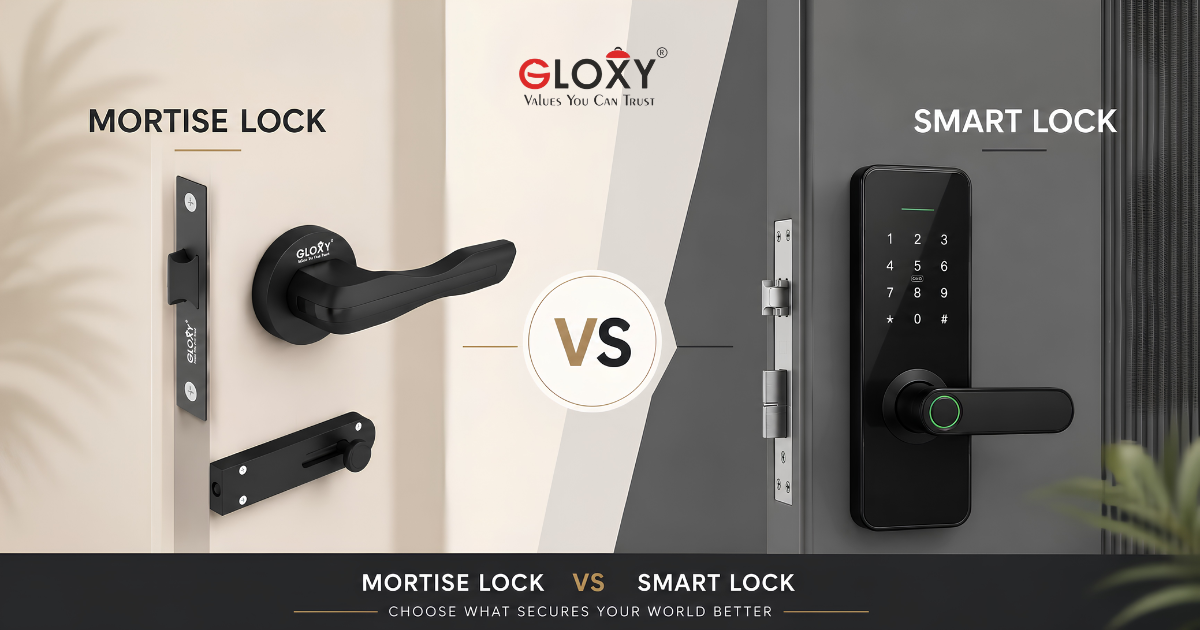
A mortise lock is a heavy, key-operated lock fitted inside a pocket cut into the door, prized for mechanical strength and long life; a smart lock is an electronic lock opened by fingerprint, PIN, card or phone, prized for keyless convenience. For most Indian main doors, the safest choice is a quality mortise lock — or a mortise body paired with smart access — because it gives you proven physical security that doesn’t depend on batteries or signal.
I’ve helped homeowners, builders and interior designers pick door hardware for years, and this is the question that comes up most at the main door. Both locks are good. The right one depends on how you live, what your door is like, and how much you want to spend. Here’s how I’d think it through.
At a glance: mortise lock vs smart lock
|
Factor |
Mortise lock |
Smart lock |
|
Everyday access |
Physical key — simple and familiar; a lost key means calling a locksmith |
Fingerprint, PIN, card or phone, with a key backup on most models |
|
Physical strength |
Excellent — the lock body sits inside the door, so more metal resists force |
Good — depends heavily on the underlying bolt and brand quality |
|
Power needed |
None — works in any power cut, every time |
Batteries (typically several months), with low-battery warning and override |
|
Lockout risk |
Higher if you lose your only key |
Lower — usually several ways to get in |
|
Upfront cost |
Lower for a comparable quality level |
Higher, plus battery and occasional service costs |
|
Best suited to |
Buyers wanting simplicity, reliability and the lowest running cost |
Families with kids/elderly, frequent travellers, and homes giving temporary access to maids or guests |
The short verdict: for raw, dependable security a mortise lock is hard to beat, while a smart lock wins on day-to-day convenience. Many Indian homes get the best of both by combining them.

What is a mortise lock?
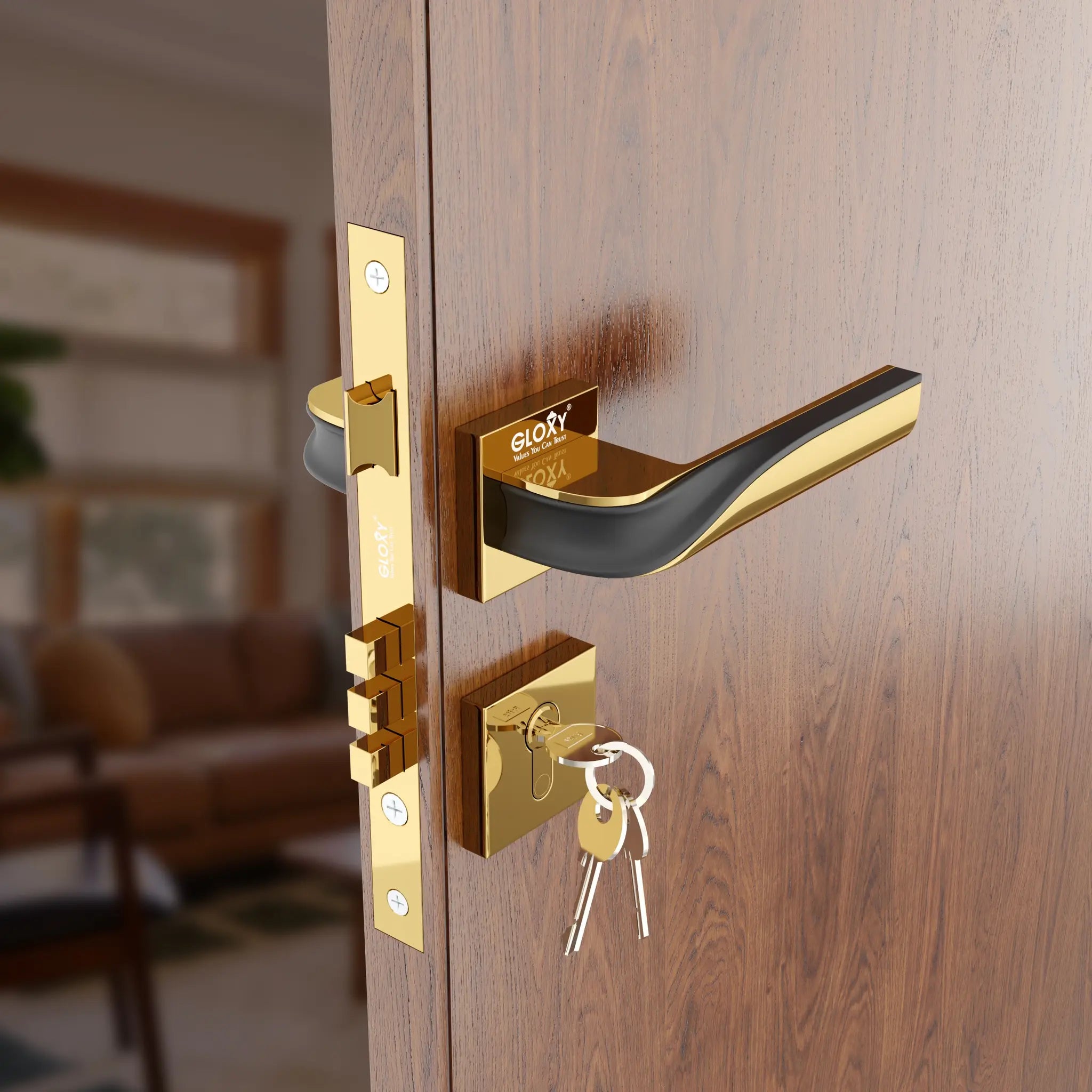
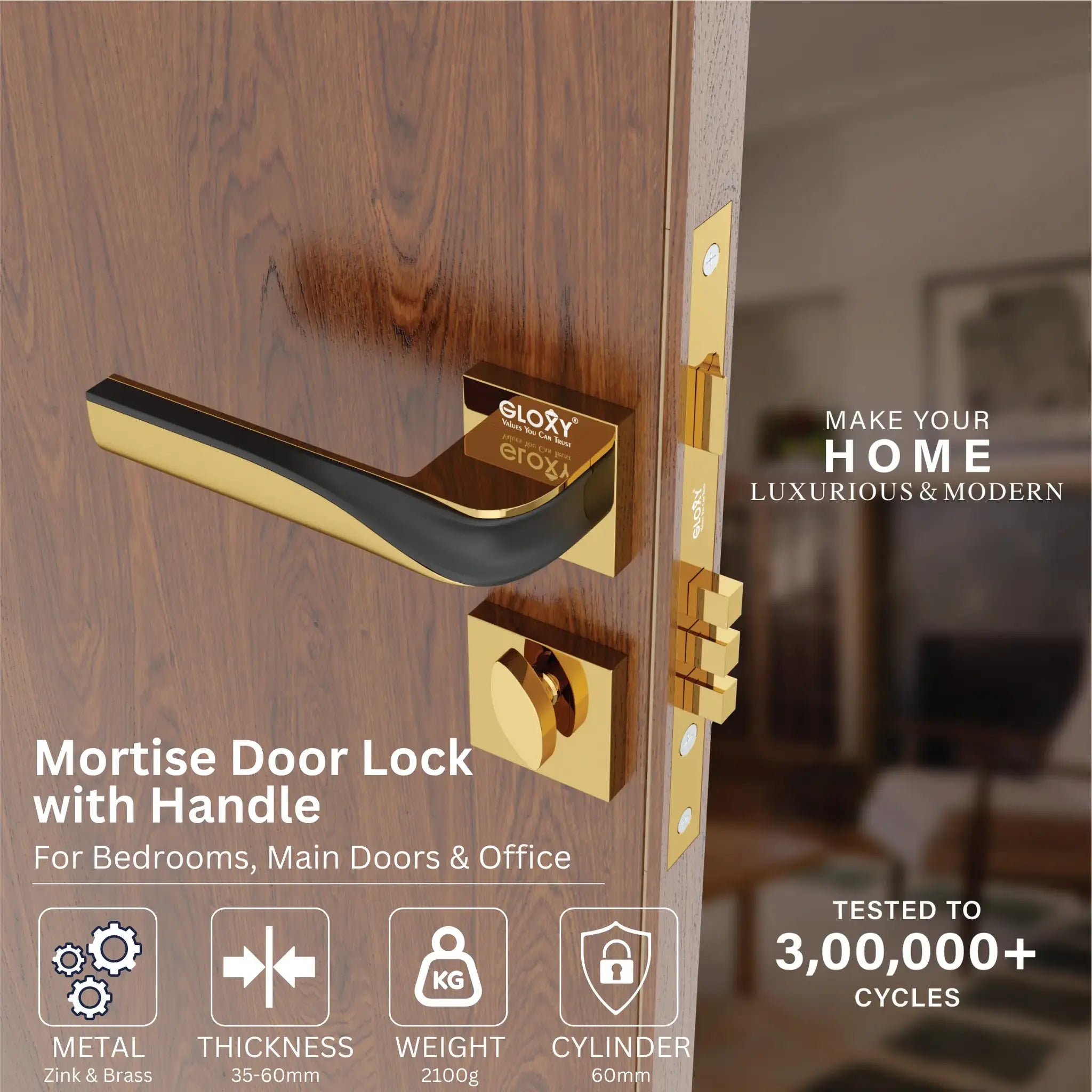
A mortise lock gets its name from the “mortise” — a pocket cut into the edge of the door — into which the lock body is fitted. Because the mechanism sits inside the door rather than bolting onto its surface, it’s stronger and sits flush for a cleaner look.
How it works is simple: the key turns a series of levers inside the lock body, which moves a sturdy deadbolt into the frame. As a rough guide, the more levers a mortise lock has, the harder it is to pick — which is why lever count is one thing worth asking about.
How a mortise lock compares to other mechanical locks
Cylindrical (knob/lever) locks bolt through the door and are quicker to fit, but are generally weaker than a mortise.
Rim locks mount on the surface — common on older doors and gates.
A mortise lock is the standard for a main door in India because it balances strength, a tidy finish and easy use.
🔧 Expert Note
When people say a lock feels “solid,” they’re usually describing a mortise. The weight and the flush fit aren’t just cosmetic — they’re a sign that more of the mechanism is protected inside the door.

What is a smart lock?
A smart lock is an electronic lock you open without a traditional key turn. Depending on the model, you can use a fingerprint, a PIN on a keypad, an RFID card, a Bluetooth or Wi-Fi connection through an app, and almost always a physical key as a backup.
The appeal is convenience and control. You can hand a one-time PIN to a maid or a delivery, see an access log of who came and when on some models, and on Wi-Fi versions, unlock the door remotely.
Smart locks run on batteries, not your home’s mains supply, so a power cut doesn’t lock you out. You’ll get a low-battery warning well in advance, and most have a 9V terminal or a key override for emergencies. India’s appetite for these is growing fast — according to IMARC Group, the India smart lock market was valued at about USD 104.5 million in 2025 and is projected to reach USD 271.7 million by 2034.
Which is more secure? The honest answer
This is where I have to be straight with you: there’s no single winner, because the two locks defend against different threats.
A mortise lock is built to resist physical force — kicking, prying and picking. For a typical Indian home, where break-ins are overwhelmingly about force rather than electronics, that physical strength matters a lot. A cheap cylinder lock can be defeated quickly; a good mortise body with a high lever count is a far tougher target.
A smart lock removes key-based weaknesses — no key to copy, no lock to bump — and a good one from a known brand uses encrypted communication. The risk shifts to electronics and battery dependence rather than hacking, which is rare for residential break-ins.
On standards, look for Bureau of Indian Standards (BIS) compliance. Mortise lock door handles are covered under BIS standard IS 4992:2024, which the government has brought under a mandatory Quality Control Order — so a BIS-certified handle and lock set is a genuine quality signal, not just marketing.
Buyer tip: Whatever you choose, never buy a 100% keyless lock for your main door. Always keep a physical key override. It’s the cheapest insurance against a dead battery or a sensor that won’t read a wet finger during monsoon.
Material and build: what the lock is made of
The mechanism matters, but so does the metal — especially in India’s humidity, hard water and coastal salt air. Here’s how the common options behave, much like the difference we cover in our guide on how materials hold up in Indian conditions.
|
Material |
Why it works |
Watch-out |
|
Brass |
Strong, naturally corrosion-resistant and warm-looking; a classic for main doors |
Raw brass can tarnish — a PVD-coated finish keeps its colour with almost no upkeep |
|
Stainless steel |
SS304 is fine for most inland homes; SS316 (“marine grade”) resists salt-air corrosion far better |
Insist on SS316 within a few kilometres of the sea (Mumbai, Chennai, Kochi, Goa) |
|
Zinc alloy |
Common on budget locks and handles; fine indoors |
Avoid bare zinc on a weather-facing main door |
🔧 Expert Note
In hard-water and coastal homes, the finish fails before the mechanism does. Spend a tier up on material at the main door — it faces the most weather and the most use, and a corroded lock looks tired long before it stops working.
Installation on Indian doors
A mortise lock needs a pocket cut into the door edge, plus the right door thickness and correct handing (which way the door opens). On a standard Indian wooden or engineered main door this is routine work for any carpenter or locksmith, and a mortise-with-handle set usually fits standard door prep.
A smart lock often needs a larger cut-out or extra drilling for the keypad, sensor and motor, and the inside and outside units must align precisely. For the main door, I’d recommend professional installation rather than DIY — a poorly aligned smart lock jams, and that’s the last thing you want at your entrance.
Measure before you buy:
1. Door thickness (commonly 35–45 mm on flats).
2. The existing lock cut-out, if you’re replacing.
3. Handing — left or right opening.
Maintenance and running cost
This is the part most buyers forget, and it’s where the two locks really differ over ten years.
A mortise lock is close to fit-and-forget. A little graphite or lock lubricant once or twice a year keeps it smooth, and a local locksmith can repair almost any mechanical lock cheaply. There’s no running cost.
A smart lock asks a bit more. You’ll replace batteries periodically (budget for it), wipe the fingerprint sensor clean of dust — a real issue in dry, dusty regions and during monsoon — and you’ll depend on the brand for service if the electronics fail. Choose a brand with reliable after-sales support in your city.
Indian buyer considerations
Power cuts: not a problem for either lock, since smart locks run on batteries — but it’s the first worry buyers raise, so it’s worth knowing.
Hard water and humidity: punish shiny chrome finishes and untreated metal; matte, brushed, PVD-brass and stainless hold up best.
Dust: can affect cheap optical fingerprint sensors; choose a well-rated sensor and a model with a good dust/moisture (IP) rating.
Service access: a mechanical mortise lock can be fixed by any locksmith; a smart lock ties you to the brand’s support network.
Indicative price bands in India
These are indicative market ranges to set expectations, not quotes — actual prices vary by brand, finish and features.
|
Lock type |
Indicative range |
Notes |
|
Mortise lock with handle set |
₹1,500 – ₹6,000 |
More for premium brass or PVD finishes |
|
Smart lock (fingerprint/PIN, with key override) |
₹6,000 – ₹25,000+ |
Rises further for full-featured Wi-Fi and combo models |
A mortise set gives you strong security for less; a smart lock charges a premium for convenience and features.
6 buying mistakes to avoid
Many of these echo the wider pattern we see in our guide on common buying mistakes — small oversights that cost more later.
1. Buying a 100% keyless lock with no physical override.
2. Ignoring door thickness and handing, so the lock doesn’t fit.
3. Choosing a cheap optical fingerprint sensor that struggles with dust or wet fingers.
4. Skipping BIS certification to save a few hundred rupees.
5. Using bare zinc or plated finishes near the coast.
6. Buying the handle and lock separately, then finding the spacing doesn’t match.
How to choose: a simple 4-step framework
Answer these in order and the shortlist almost builds itself.
1. Start with your security need. Want maximum physical strength and zero running cost? Lean mortise. Want keyless convenience and access control? Lean smart.
2. Match your door. Confirm thickness, handing and cut-out before anything else.
3. Set your budget tier honestly — and buy one tier up at the main door specifically.
4. Then pick convenience features. Fingerprint, PIN, app — choose only what you’ll actually use, and confirm there’s a key backup.
Pre-purchase checklist: BIS-certified, key override present, finish suited to your climate, correct size for your door, matched handle-and-lock set, and a brand with local service.
If you want to compare options side by side, browsing a focused range like Gloxy’s main door locks lets you filter mortise sets by finish and handle so you can apply these four steps without wading through unrelated hardware. For design inspiration, our guide to main door handle designs pairs well with this one.
The hybrid option: best of both worlds
For many Indian homes, the smartest answer isn’t either/or. A quality mortise lock for proven mechanical strength, paired with smart access — either a smart deadbolt on the same door or a smart handle set with a mortise body — gives you keyless daily convenience and a dependable mechanical lock to fall back on if a battery dies. It costs more, but for a busy household it’s often the setup I’d recommend.
Conclusion
The better lock for your main door isn’t the trendiest one — it’s the one that suits your door, your climate and how your family lives. A mortise lock remains the benchmark for dependable, low-maintenance physical security, while a smart lock earns its place on convenience and control. Decide with your security need first, your door second, budget third, and features last — and if you can stretch to it, a mortise-plus-smart hybrid genuinely does give you both.
FAQ
Is a mortise lock better than a smart lock?
For raw physical security and reliability, a mortise lock is generally stronger and needs no power, while a smart lock is better for keyless convenience and temporary access. Many homeowners combine the two for the best of both.
Do smart locks work during a power cut?
Yes. Smart locks run on batteries, not your home’s mains supply, so power cuts don’t affect them. Most also have a low-battery warning and a physical key or emergency power override.
How much does a mortise lock cost in India?
Indicatively, a good-quality mortise lock with handle set runs from around ₹1,500 to ₹6,000, with premium brass and PVD-finished sets costing more. Treat these as ballpark figures, since prices vary by brand and finish.


